Before We Say A Word
First impressions count.
There are very few professions where the first few moments with a complete stranger matter quite as much as they do in chauffeuring.
Within minutes, someone has trusted you with their safety, their time and, often, their privacy. Before you've even turned a wheel, they need to feel they're in good hands.
I've come to realise that trust begins long before the first conversation.
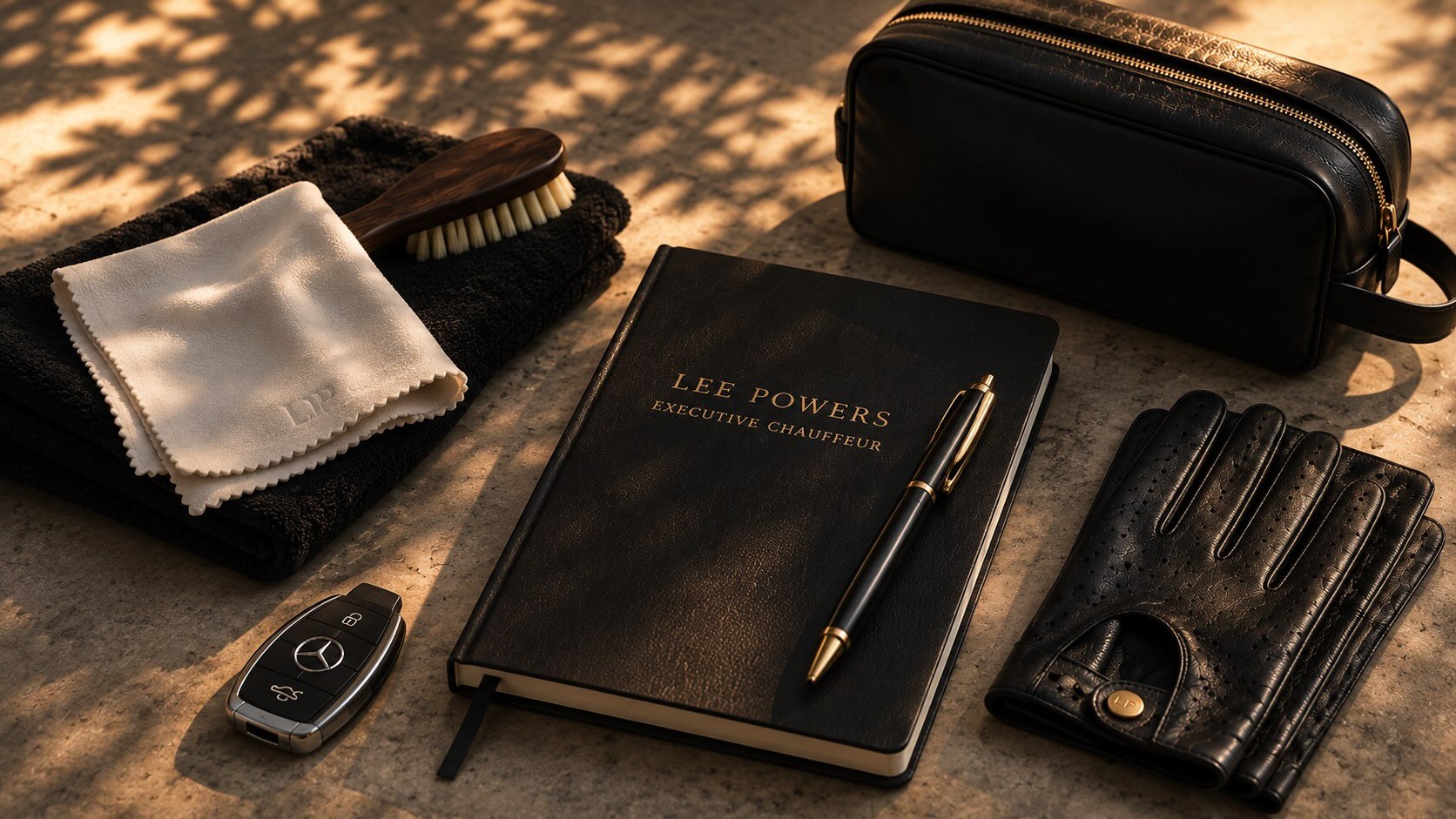
I can't control what someone brings to the journey, but I can control what I bring. Is my suit pressed? Are my shoes polished? Have I put my phone away? Is the car spotless? Am I standing ready to welcome them? None of these things make me a better driver, but they communicate professionalism before I've even said hello.
Before becoming a chauffeur, I worked as a photographer. Building trust in a matter of minutes was part of the job. Whether I was photographing a celebrity, athlete or a chief executive, the first few moments always mattered. People respond to authenticity far more than rehearsed charm, and I've realised the same skill followed me into the front seat.
There's a psychological concept called thin-slicing—our ability to make surprisingly accurate judgements from very small amounts of information. Hearing about it, I realised it described something I'd been doing instinctively for years.
Whether I'm greeting someone outside the car or they quietly slip into the back seat, I'm immediately picking up on small cues: the tone of a "Good morning", the pace of their speech, a glance in the mirror’.
At the same time, I know they're doing exactly the same with me. They're deciding whether I seem calm, organised and professional. Whether I've taken care with my appearance and the vehicle. Whether they can relax for the next hour or two.
By the time either of us says, "How are you today?", we've already had our first conversation.
We may not even speak the same language, but good service has a language of its own. A smile. A warm greeting. Helping with luggage. A smooth drive. Knowing when silence is the better form of hospitality.
That's what keeps the job interesting.
Driving is the easy part.
Understanding people is the craft.
Every now and then, you receive a quiet reminder that you've got it right. Someone requests you again. Not because of the route you took or the car you drove, but because, for an hour or two, they felt comfortable, understood and genuinely looked after.
In a profession built on trust, I can't think of a higher compliment than that.
Another note from the front seat.