Is Our Idea of Luxury Changing?
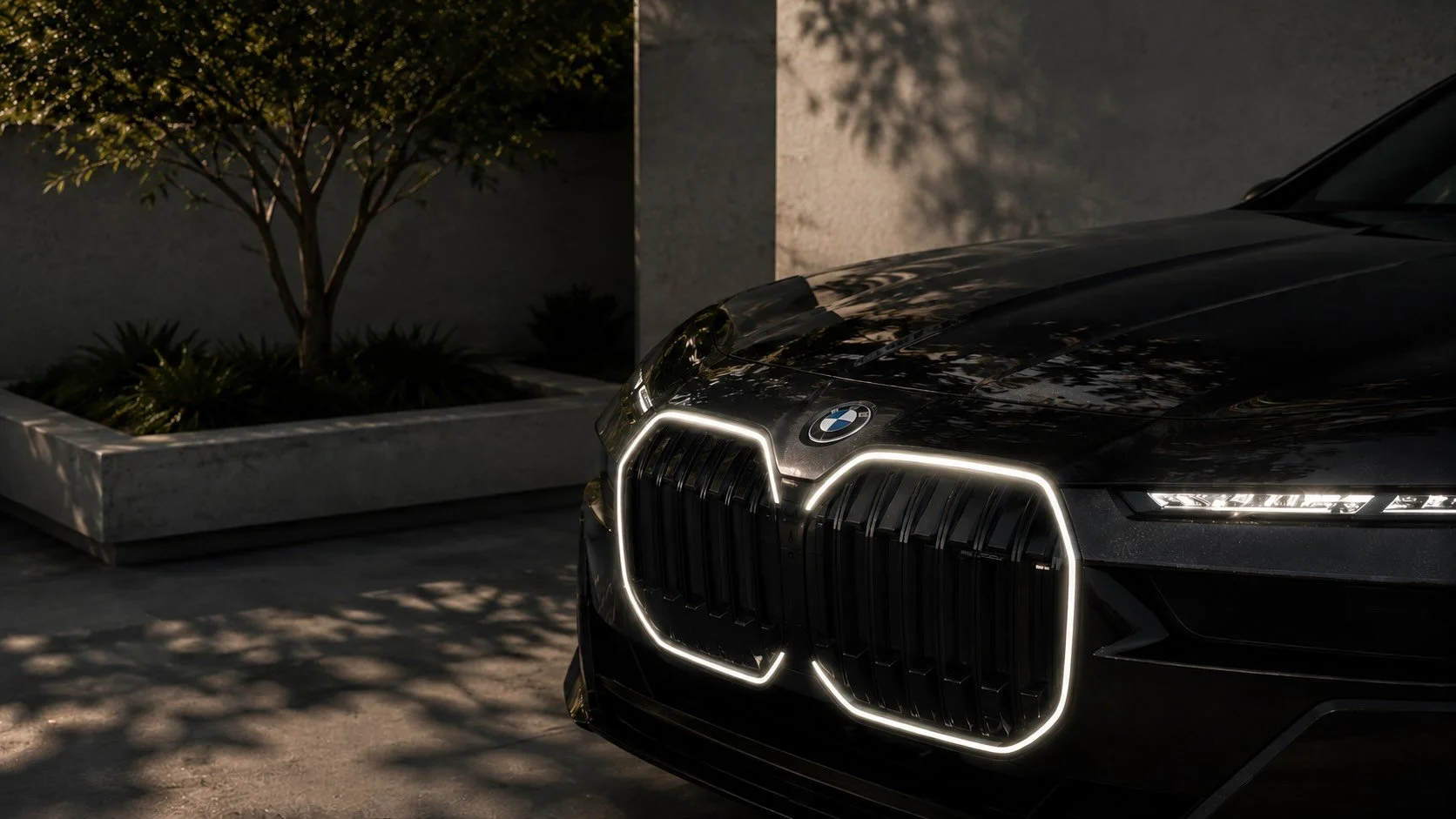
The iconic BMW i7 kidney grill, does it still define luxury?
While waiting to collect a client from a luxury hotel recently, I found myself fascinated by the staff.
They wore sand-coloured chinos, grey polo shirts, brown shoes and caps. They looked contemporary, relaxed and quietly confident. The service was exceptional, and it struck me that this was still unmistakably a luxury brand—it was simply expressing luxury in a different way.
It made me wonder.
Is our idea of luxury changing?
That question stayed with me because I think it applies to chauffeuring too.
For decades, our profession has been built around traditions that have served it well. Black cars. Dark suits. Conservative ties. Those things still communicate professionalism, and I'm certainly not suggesting we leave them behind.
I still wear a suit. I still polish my shoes. I still believe presentation matters.
But I've started to wonder whether we've come to mistake the symbols of luxury for luxury itself.
A black tie doesn't guarantee attention to detail.
A luxury car doesn't guarantee a luxury experience.
In the same way, wearing the uniform isn't the same as presenting yourself professionally. I've seen chauffeurs with the right suit, the right car and all the right credentials, but the suit is creased, the shoes haven't been polished, the tie is loose or they're standing outside the car looking at their phone. It's as though putting on the uniform is considered enough.
For me, the uniform isn't the standard. It's the opportunity to meet the standard.
That thought stayed with me when I collected two CEOs from technology companies on separate occasions. One arrived in premium athletic wear. The other wore cargo trousers and a hoodie. Twenty years ago, that might have raised an eyebrow. Today, it felt completely normal. Their credibility came from who they were, not what they were wearing.
It made me wonder whether the expectations of today's chauffeur clients are evolving too.
The same question applies to the cars we drive.
For years there was an obvious answer to what an executive chauffeur vehicle should be. Today, brands such as Polestar, Genesis, Lucid and Denza are offering a different interpretation of luxury—quieter, cleaner, more understated and increasingly electric. They won't suit every client, but the fact they're even part of the conversation tells me expectations are evolving.
Perhaps the same is true of service.
Reliability, punctuality and presentation should never be optional. They're the foundations of the profession. But they're only the starting point.
The journeys people remember are rarely about the badge on the bonnet or the knot in your tie.
They remember feeling welcomed without it being overdone. They remember a chauffeur who instinctively read the room, knew when conversation was welcome and when silence was the better service. They remember a drive so smooth they forgot they were even in the car. They remember feeling that their privacy was respected without it ever needing to be mentioned.
To me, that's what luxury feels like.
The traditions of chauffeuring deserve enormous respect. They've shaped a profession built on trust, discretion and professionalism.
I'm simply curious whether today's clients value those qualities in different ways than they once did.
Perhaps modern luxury isn't about replacing tradition.
Perhaps it's about recognising that the real luxury was never the tie, the car or the uniform.
Perhaps it has always been how you make people feel.
I'd be interested to hear your thoughts.
Another note from the front seat.